Walk into any detailing studio in Pune and you’ll hear three labels: 9H, 10H and graphene. They sound like a ladder, each one stronger than the last. They aren’t quite that. Two of them describe a single, narrow lab test, and the third describes an ingredient. None of them tells you how long the coating will last on your car.
We offer coatings sold as 9H and 10H, and graphene coatings, so this isn’t a page telling you not to buy them. It’s a page about what you’re actually paying for.
What does “9H” actually mean?
It’s a pencil-hardness grade. In the standard test (ISO 15184, and the similar ASTM D3363), a technician pushes pencil leads of known hardness across a cured coating at a fixed 45° angle under a fixed load. The rating is the hardest pencil that doesn’t scratch or gouge the film.
The pencil scale runs from soft to hard: 9B, 8B and so on up to B, then HB, F, H, 2H and up to 9H. Common pencil-hardness kits run from 6B to 6H; extended kits (and ISO 15184 sets) go up to 9H. So “9H” means the coating resisted the hardest pencil on the extended scale, on the panel the brand tested.
That is a real result. It’s also a very narrow one:
- Pencil lead is graphite and clay. The grit on Pune roads is largely quartz sand, which is far harder than any pencil lead. A 9H coating will still scratch when dirt is dragged across it.
- The ISO standard itself is modest about the test. Its abstract says this rapid test hasn’t been found useful for comparing the pencil hardness of different coatings, and is better at ranking a series of panels that differ a lot.
- ASTM adds that results vary between labs, and advises caution when comparing coatings of similar hardness.
- The panel matters. A coating tested on glass or a metal panel isn’t being tested on your car’s clear coat. The same coating can score differently on different bases.
So 9H tells you the coating cures hard. It doesn’t tell you it’s scratch-proof, and it doesn’t let you rank one 9H brand against another.
Is 10H harder than 9H, and does it matter?
The test scale stops at 9H. “10H” isn’t a grade on the pencil scale at all, so it comes from a brand’s own test; some pencil ranges sold for artists go one step past 9H. A few makers say they have third-party reports; many publish none.
What it doesn’t mean:
- It isn’t a different kind of protection. A 10H coating is still only a few microns thick, sitting on a clear coat tens of microns thick. A key scratch or a stone goes through both, whatever the rating.
- It isn’t comparable across brands. By the standard’s own description, the test is the wrong tool for ranking different coatings.
- It isn’t a durability rating. How long a coating keeps its gloss and beading depends on prep, layers, curing and washing, not on one pencil grade.
Our honest view: treat 9H and 10H as “this coating cures hard” and stop there. If a studio is selling you the second H, ask to see the test report and what the coating was tested on.
What is a graphene coating, and what does the evidence say?
A “graphene coating” is usually a ceramic-style coating (silica or polysiloxane based) or a polymer coating with graphene or reduced graphene oxide added. Garware describes it this way in its own guide: graphene-related materials in a resin or protective base, with different forms and amounts of graphene from product to product.
What brands claim: less water spotting, a slicker surface that sheds dirt, better heat dissipation, and longer life than plain ceramic. Garware’s own graphene coating, for example, lists 7–9H hardness, a 118–121° water contact angle and about 15% more gloss than conventional ceramic coatings.
What the evidence says:
- Independent side-by-side tests are scarce. Most published performance data comes from the companies selling the product.
- The name alone proves little. Garware, which sells a graphene coating and promotes it as an advance on ceramic, still writes that the word “graphene” alone doesn’t establish performance; formulation, preparation, application, curing and testing do.
- “Graphene” on a label is loosely used. A 2018 study of graphene bought from 60 producers worldwide found that much of it was mostly graphite rather than true graphene, as a Nature commentary on the study noted. Coating makers rarely disclose how much graphene is in the bottle, or what kind.
- Note the hardness claim. Even Garware’s graphene coating quotes 7–9H on the same pencil scale. Graphene doesn’t put a coating in a different league of hardness.
None of this makes graphene coatings bad. Many are a brand’s newest, most complete system, with better resins and a top coat. That can be worth paying for. Just pay for the system and the work, not the word.
9H vs 10H vs graphene: side by side
| Feature | “9H” ceramic | “10H” ceramic | Graphene coating |
|---|---|---|---|
| What the label refers to | Resisted a 9H pencil in a lab scratch test | Resisted a 10H pencil in the brand’s own test | Graphene or graphene oxide added to a coating base |
| Usual base | Silica or polysiloxane | Usually similar, often a denser or multi-layer system | Silica, polysiloxane or polymer, plus graphene |
| Scratch-proof? | No | No | No |
| Stops stone chips? | No | No | No |
| What it does well | Gloss, beading, UV and stain resistance, easier washing | The same | The same; brands also claim less water spotting and a slicker feel |
| Independent evidence for the headline claim | A lab test the ISO standard says isn’t for comparing coatings | The same, one grade higher | Limited; mostly maker-published |
| Life brands typically claim | 1–2 years (entry, one layer) to 3–5 years (multi-layer) | 3–5 years or more | Often 5 years or more, but claims vary widely (2–10 years in Garware’s own blogs) |
| Suits | Daily drivers who want easy washing on a budget | Owners who want a pro multi-layer job | Owners who want a brand’s top tier, especially cars parked outdoors |
For what each tier typically costs in Pune, see our ceramic coating price guide.
What actually decides how long a coating lasts?
| Factor | Why it matters | What to ask the studio |
|---|---|---|
| Paint prep and correction | A coating locks in whatever is under it. Iron fallout, tar and swirls must come off first, or the coating bonds to dirt and preserves defects. | What decontamination and how many polishing stages? |
| Layers and thickness | The whole coating is only a few microns thick. More layers, properly cured, give it more to wear through. | How many layers, and of which product? |
| Where it’s applied | Coatings need a clean, shaded, dust-free space to level and flash off properly. | Is it applied indoors? |
| Curing | Most coatings typically ask you to keep the car dry for about the first day and avoid shampoo washes for about a week while the coating hardens; the exact window depends on the product. | When can I drive it in rain, and when is the first wash? |
| Washing | Roadside dry-cloth wipes and harsh shampoos wear a coating fast. Garware lists borewell water drying on the paint, roadside washes and delayed removal of bird droppings among the habits that shorten coating life. | What shampoo and what wash method do you recommend? |
| Maintenance | Many brands tie warranties to periodic inspections or top-ups. | What keeps the warranty valid? |
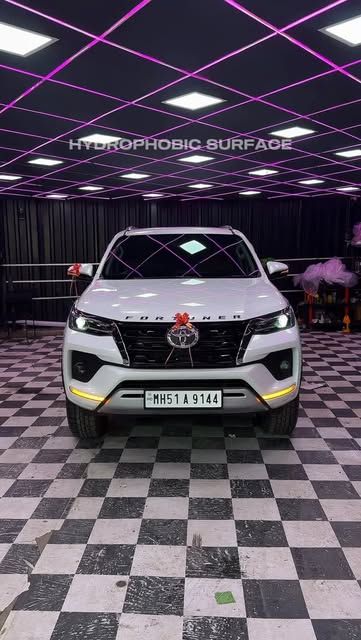
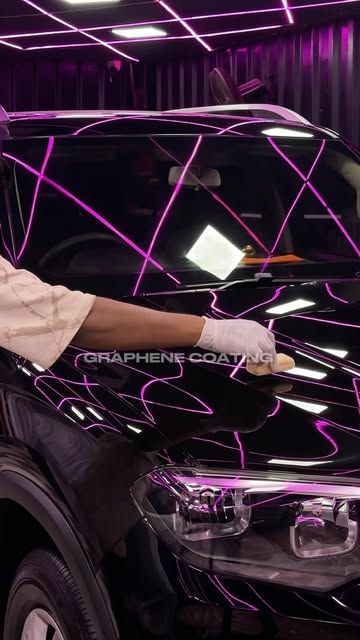
At SaiMetro we apply coatings indoors in the PinkStudio, away from road dust, and we explain the product, the number of layers and the manufacturer’s terms before we start. Expect a coating job to typically take one to three days, with correction and the initial cure included; we’ll confirm the time when you book. You can see a graphene job on a Scorpio N and the water beading on a coated Fortuner in our reels.
Where does PPF fit in?
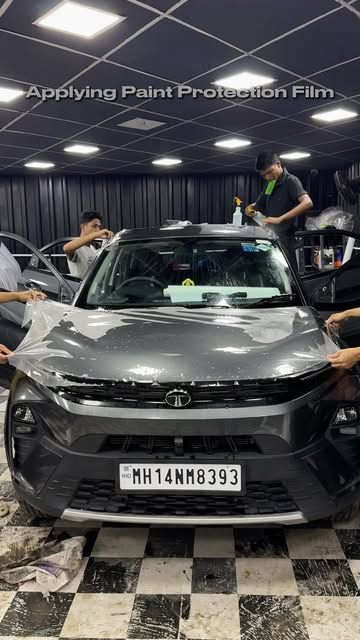
If what worries you is stone chips on the expressway, scrapes in a tight peth lane or a key along the door, no coating label will help. That’s the job of paint protection film, a polyurethane layer more than 20 times thicker than a coating. Many owners combine the two: PPF on the front or the full body, with a coating on top. Our PPF vs ceramic coating guide walks through that decision, and our ceramic coating and graphene coating pages explain how we do each job.
Ready to book?
Message us your car model, its age and where it’s usually parked on WhatsApp. We’ll tell you plainly which coating makes sense for it, and send a quote for your car.