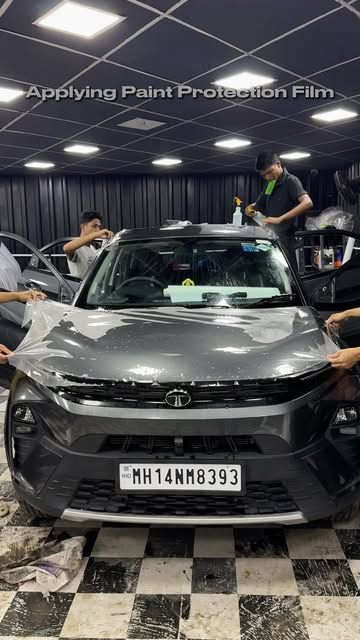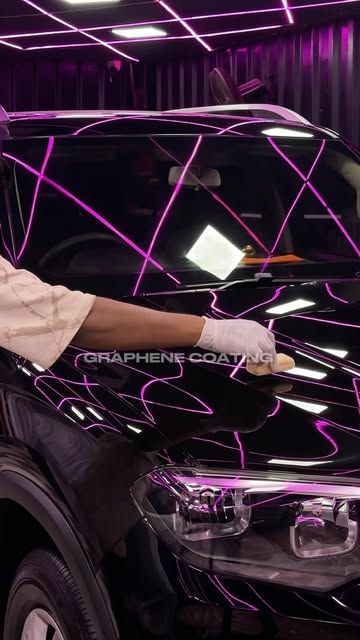
Most people ask this question the wrong way round. They compare the two as if one were a cheaper version of the other. They aren’t. PPF and ceramic coating protect against different things, and the right choice depends on what actually damages paint on the roads you drive.
A useful way to picture it: PPF is the screen guard on your phone, and a ceramic coating is the slick oil-repelling layer on the glass. One takes the knock. The other keeps the surface clean and shiny. You can have either, or both.
What is the actual difference between PPF and ceramic coating?
Paint protection film (PPF) is a clear thermoplastic polyurethane (TPU) film with an adhesive layer and a self-healing top coat. Garware’s Premium film, for example, is about 190 microns thick in total, several times thicker than a typical factory clear coat. That bulk is what absorbs a flying stone.
Ceramic coating is a liquid, usually silica-based, that bonds to the clear coat and cures into a hard, glassy layer only a few microns thick. It is far too thin to absorb an impact. Its strengths are chemical: gloss, water beading, UV resistance, and a surface that bird droppings, sap and road film struggle to grip.
| Feature | PPF | Ceramic coating |
|---|---|---|
| What it is | Clear TPU film with adhesive and a self-healing top coat | Liquid coating that cures into a thin glassy layer |
| Thickness | About 160–190 microns nominal (Garware data sheets) | A few microns |
| Stone chips and gravel | Absorbs most of them | No meaningful protection |
| Light swirls and wash marks | Top coat self-heals light marks with warmth | Resists some marring, but can still swirl |
| Key scratches and deep cuts | Film takes the hit; the panel gets re-filmed | Go straight through |
| Bird droppings, tree sap | Buys you time; a damaged panel of film can be replaced | Buys you time; wipes off more easily |
| UV fading | Shields the panels it covers | Slows oxidation and fading |
| Water beading and easy washing | Moderate on most films | Strong, the main thing owners notice |
| Gloss | Clear gloss, or matte if you choose a matte film | Adds depth and gloss |
| How long it lasts | Manufacturer warranties of 3 years to lifetime (Garware), 5–10 years (3M), 10 years (XPEL’s main films) | Typically 2–5 years with proper care (Garware’s guide) |
| Fitting time | Typically 3–5 working days for full body, 1–2 for a front kit | Typically 1–3 days |
| Aftercare | No wash for 48–72 hours; no pressure jet at the edges; some warranties need maintenance visits | pH-neutral shampoo; periodic inspection or top-up |
| Relative cost | Several times the cost of a good coating for full body | The lower-cost option |
For current numbers, see our PPF price guide and ceramic coating price guide.
Which one stops stone chips on the expressway?
Only PPF. On the Mumbai–Pune Expressway and long highway runs, small stones flicked up by trucks and other cars hit the front of your car at closing speeds no coating can absorb. Garware, which sells both film and coatings, says plainly that ceramic coating cannot prevent stone chips, dents or deep scratches.
Chips cluster in predictable places:
- the leading edge of the bonnet and the front bumper;
- headlamps and mirror caps;
- A-pillars and the leading edge of the roof;
- behind the wheels: rocker panels and the lower doors, sandblasted by your own tyres on gravelly roads.
That’s why a front kit (bumper, bonnet, fenders, mirrors) is the most common PPF choice. It covers where most chips land at a fraction of the full-body cost.
Which handles bird droppings, tree sap and hard water better?
Both help, and neither makes these harmless. Bird droppings are acidic and sap is sticky. On a coated car they sit on the coating rather than biting into the clear coat, and they wipe off more easily. On a filmed panel the film takes the stain, and a badly etched section of film can be replaced instead of repainting the panel. Garware’s care advice for both its film and its coatings is the same: remove them promptly.
Hard water is a Pune problem many people don’t think about. Tanker or borewell water left to dry leaves mineral spots. A coating makes rinsing easier, but you still need to dry the car. Garware lists borewell water drying on the paint, and roadside washes, among the habits that shorten a coating’s life.
In the summer, a dropping baked onto a dark bonnet for three days can mark any surface. Coating or film, wipe it off the same day.
Can you have both? The combination approach
Yes, and for many cars it’s the best value. The order matters: film first, coating on top.
- Garware advises against fitting its PPF on a ceramic-coated car, because the coated surface weakens the film’s adhesion, and its warranty excludes film applied over ceramic, Teflon or wax. 3M India says the same and asks for an existing coating to be professionally removed before film goes on.
- 3M India and Garware both describe applying ceramic coating over PPF for extra gloss, water beading and easier cleaning.
- Check the film maker’s rules on the coating. XPEL’s warranty, for example, doesn’t cover defects caused by non-XPEL ceramic coatings on its film.
Common combinations:
| Combination | What it covers | Who it suits |
|---|---|---|
| Front PPF kit + ceramic on the whole car | Chips at the front; gloss and easy washing everywhere | Most new cars, most budgets |
| Full-body PPF + ceramic on top | Chips, scrapes and stains everywhere, plus beading | Long-term owners, dark or premium paint |
| Ceramic only | Gloss, UV and stain resistance; no impact protection | City-only cars, older cars after paint correction |
| PPF only | Impact protection; less beading on most films | Owners who don’t mind a little more washing effort |
Which should you choose for these Pune situations?
| Your situation | What hurts the paint | What we’d suggest |
|---|---|---|
| Expressway or highway commuter (Mumbai–Pune Expressway, NH48 trips to Satara or Kolhapur) | Stone chips, sand, insects at speed | Front PPF kit at minimum, with ceramic over the whole car. Full body if you do it weekly. |
| Parked in a peth lane under trees (Mangalwar, Kasba, Sadashiv, Narayan Peth) | Sap, droppings, dust, two-wheelers and handcarts brushing past in tight lanes | Ceramic coating for easy cleaning, plus PPF on bumper corners, door edges and door cups. Full-body PPF if the car lives on the street. |
| Brand-new car at delivery | First roadside wash swirls, transport marks, the first highway trip | Decide before delivery. Inspect the paint, fit PPF before the first long drive, then coat over it. |
| Older car, or getting it ready to sell | Swirls, oxidation, dull paint | Paint correction plus ceramic coating. Film over tired paint locks in its defects, and Garware’s warranty excludes repainted vehicles. |
| Thar, Scorpio N or Fortuner that goes off-road | Branches, trail scratches, mud | Full-body PPF (gloss or matte), with a coating on top to make mud rinse off. |
How do PPF and coating age in Pune weather?
PPF. Modern TPU films are made to resist yellowing, and that’s what manufacturer warranties cover: Garware’s Premium warranty, for instance, covers cracking and yellowing for eight years. Edges are the weak point. Dirt builds up along them, and a pressure jet aimed at an edge can lift it, which both Garware and XPEL warn against. Keep the nozzle away from edges and clean them with a soft microfibre.
Ceramic coating. A coating doesn’t peel; it slowly wears. The first sign is water sheeting off instead of beading, then dust sticking the way it used to. Summer sun, monsoon grime and harsh roadside shampoos speed that up. A pH-neutral wash and a periodic top-up slow it down.
A quick decision guide
- You drive the expressway or highways often: get PPF on the front at least.
- Your car is new and you’ll keep it five years or more: PPF first, then coating over it.
- Your car lives in the city and you’ll sell it in two or three years: ceramic coating, plus film on the most-knocked areas if budget allows.
- Your paint is already swirled or dull: paint correction and coating; leave PPF for after correction, if at all.
- You want the lowest-effort washing: coating, whether or not you also have film.
The warranty depends on the film or coating grade you choose, and we explain the manufacturer’s terms before we start. See our PPF, ceramic coating and graphene coating pages for how each job is done in the PinkStudio.
Ready to book?
Message us your car model and how you use it (daily city runs, expressway, parking under trees) on WhatsApp. We’ll suggest PPF, coating or both, and send a quote for your car.